Home » 2014 (Page 2)
Yearly Archives: 2014
The management accountant as cloud herder Part 2
It has been suggested that “management accounting” as a label is redundant (Otley, 2008), and that the management accountant as a role (or management accounting as a set of tasks) is moving away from counting beans and crunching numbers to an in-house consultant on operational and strategic topics and decision-making, even a business partner (Weber, 2011). In other words, they should help make sense of the information and advise the decisions that based on our textbook-knowledge the managers should take based on what management accountants provide them. I would claim that based on this, the management accountant is assumed to take a “grey eminence” position as a powerful advisor to the managers.
Now based on our own survey, as stated by Martin Quinn on his IMARN-blog, “a substantial number of respondents (40%) noted that managers use tablets and smartphones to obtain information for decision-making”. That means that managers (with or without knowledge of the management accountant) are able to make quicker decisions by obtaining decision-relevant information with a tap or a swipe, using anytime-anywhere technology like tablets and smartphones, powered by wifi and broadband. The easy access to cloud technology and the generation of so-called “big data” thus enables managers to bypass the management accountant. If their role was not to take another dent, management accountants will need to re-define themselves as quickly as the technological cycles go, on a permanent basis. They will need to be more than “just” business partners – they need to be IT-savvy knowledge workers (Bontis, 2011), experts in handling of big data, and “cloud herders”, up-to-date with technological developments that may impact how management decisions can be improved and supported. Management accounting will need to accept the responsibility to develop the IT procedures so the technology is able to provide information at a finger’s tap.
This would determine a strong impact on the discipline of management accounting itself – the toolbox of instruments like budgeting, break-even or variance analysis will not only need an overhaul but also an extension. Even practice will have difficulties keeping up with all these requirements due to the sheer pace of technological change and “information bombardment” that needs to be turned into corporate gold.
And where is academic research in all of this, with their overly long publishing cycles, cumbersome dissemination procedures and penchant for “theory first, practice later”? The number of publications in accounting and finance journals that deal with the aforementioned technologies (and their impact) is low. Closing the research – practice gap anyone? I might have a theory for it.
References:
Bontis, N. (2011), “Information Bombardment: Rising Above the Digital Onslaught”, Institute for Intellectual Capital Research, Canada
Otley, D. (2008), “Did Kaplan and Johnson get it right?”, Accounting, Auditing and Accountability Journal, vol. 21, no.2, pp.229-239
Quinn, M. (2013). Researching information technology and management accounting change – some researchers thoughts. [Blog] IMARN. Available at: http://imarn.org/2013/01/28/management-accounting-change-and-information-technology-some-researchers-thoughts/ [Accessed 19 May. 2014].
Weber, J. (2011), “The development of controller tasks: explaining the nature of controllership and its changes”, Journal of Management Control, Vol. 22, Iss. 1, pp.25-46
The management accountant as cloud herder Part 1
Technological change has impacted and shaped society for ages – from the first use of a tool to the first abacus up to steam power and the computer. That is nothing new, and I have yet to find the person to contest it.
Hand in hand with technological change came the craving to codify information generated – arguably, the quicker the technological change, the more information generated. That means information about EVERYTHING. One of the main drivers was undoubtedly IT and computer technology, but only since the world wide web became fast and affordable to the masses (and businesses), the flow of newly generated information and data is mind-blowing. According to Nick Bontis from McMaster University in Hamilton, Canada, everything we know and wrote down on a stone, papyrus or in a Word document – or as he calls it “cumulative codified information base” doubled every 30 years when evaluated in the 1930s, every 7 years in the 1970s, in the future we can expect that everything we know and wrote down doubles every 11 hours (Bontis, 2011). Even from our own experience as part of the world wide web, email and social media we can tell that we have no way of keeping up even with everything that lies in the sub-set of “interesting to me”.
Now it is safe to say that businesses have always produced massive amounts of data, from ledgers in the 15th century to customer data used and employed by the likes of Google, Amazon or Facebook. Data from transactions, patterns in customer behaviour, market reactions, costs and prices – it goes on and on. The assumption is thus not far-fetched that businesses as part of our culture and society are at least not slower in codifying new information.
To managers, that information is key to decisions they need to make on various bases, from daily, short-term to strategic, long-term ones. In order to do this – and so we learn and teach and assume – the management accountant is the role that is responsible in order to gather, process and provide this decision-relevant information to the managers. Looking in any textbook, however modern, shows that this is still the basic assumption what the management accountant is and does.
(Continued in part 2)
Technological progress 2
Following from our last post, have a look at this:

I came across it on a social network. If you are a student, you may be too young to remember when Internet speeds were 64Kb per second or so – yes that’s Kb not Mb per second. Nowadays 40-50 Mb is normal at home and in business. That’s nearly 1000 times faster.
Technological progress
Here’s are very simple graphic which shows how technology has progressed in 9 years.
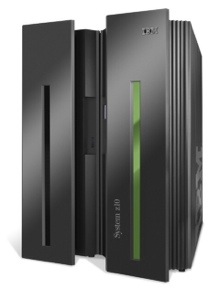
Mainframes 50 years old and still in use
In Chapter 1 of our book, there is a brief history of computing. The mainframe computer is 50 years old and this BBC feature gives a brief summary of their history. And as the article notes, they are still in use today.
iXBRL in action – Ireland’s Revenue Commissioners
Image reisgtered to XBRL.org
From late 2013, most larger Irish companies have to file their financial statements in iXBRL format. As you learned in Chapter 7 of our textbook, iXBRL is an embedded form of XBRL. The Revenue Commissioners – Ireland’s tax authority – provide lots of useful information on iXBRL at this link. It is worth having a read through these pages as it brings Chapter 7 to life.
Excel tips – INDEX and MATCH
Here is a link to a very useful exercise on the Excel INDEX and MATCH functions. These functions are useful for looking up data in spreadsheets.
Inbound interfaces – an example from SAP
As you might imagine, any business that starts using a system like SAP will most likely want to transfer data from their old system. This might be anything from customer details, to open invoices on customer/supplier accounts, to closing ledger balances. Transferring can be done two ways, manually to using an interface.
Ultimately, using an interface is probably best as it automates mundane work and is likely to be less error prone than manual entry. For example, can you imagine and organisation with 2,000 customers, each with 5 outstanding invoices? That’s 10,000 entries to be made manually – not an ideal scenario. So an interface would be the best option, but what is an interface?
In this case, we can describe an interface as an agreed format to transfer data from one system to another. SAP for example uses a concept call iDocs to not only transfer data within SAP, but also receive data from outside. You can think of an iDoc as a simple text file, with lines of text. The first line is a control record, with each line thereafter a data record. In simple terms, the control record tells the system where the data which follows is to go. Each record (line) in the iDoc is 1,000 characters long, and the position of each character determines what the data means – the positions are defined by SAP. Here is an example of what an iDoc record might look like:
ORDERHEADER 1088 1089 12500.50 24121998 Micky Mouse
Normally, a programmer develops some programme code which can extract data from the sending system to comply with iDoc format. Then, when the programme is run, the iDoc is read by SAP and the relevant data fields are populated e.g. customer details, open invoices.
Keeping data secure
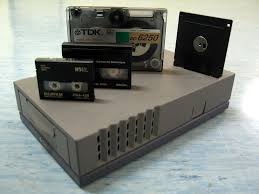
Image from wikipedia
It is good practice to keep a backup copy of key business data. Basis practice is to take a backup of key organisational data regularly on a medium that can be stored offsite if necessary. Arguably, in a cloud computer environment a backup is not needed, but many organisations still (and probably always will) maintain some data internally.
One quite old method of storing a backup copy of data – or even storing data – is on magnetic tape. As recently noted in the Economist, this backup medium has gained a new lease of life. Cloud storage has become so cheap and fast, that the tape could have been seen as redundant. But one thing a magnetic tape has is portability – it can thus be easily secured anywhere, away from normal business risks or even hackers. As noted in the Economist article, many organisations also now generate huge volumes of data (i.e. big data) which may be useful for analysis. Tapes can easily store such data.
The article also notes four advantages tapes have as a backup medium:
1- data can be retrieved fast
2- power is not needed to store the data
3- there are secure as mentioned
4- they can be repaired (spliced).
There are also likely to be improvements in tape technology in coming years as their value for storing large amounts of data has come back into vogue.
 Business information systems for accounting students